Description
**A Question Asked in Wood, Answered in Every Blessing Around You**
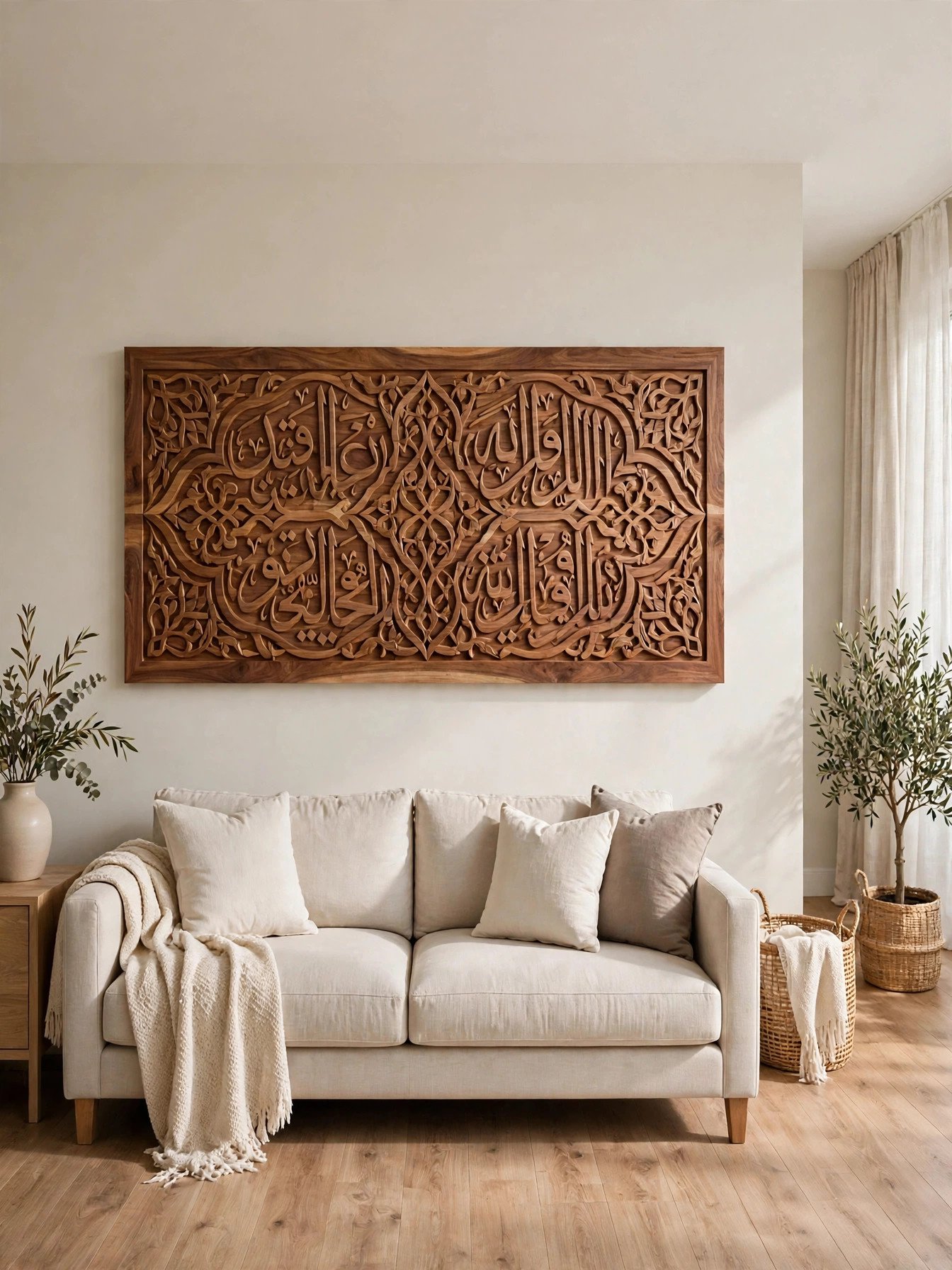
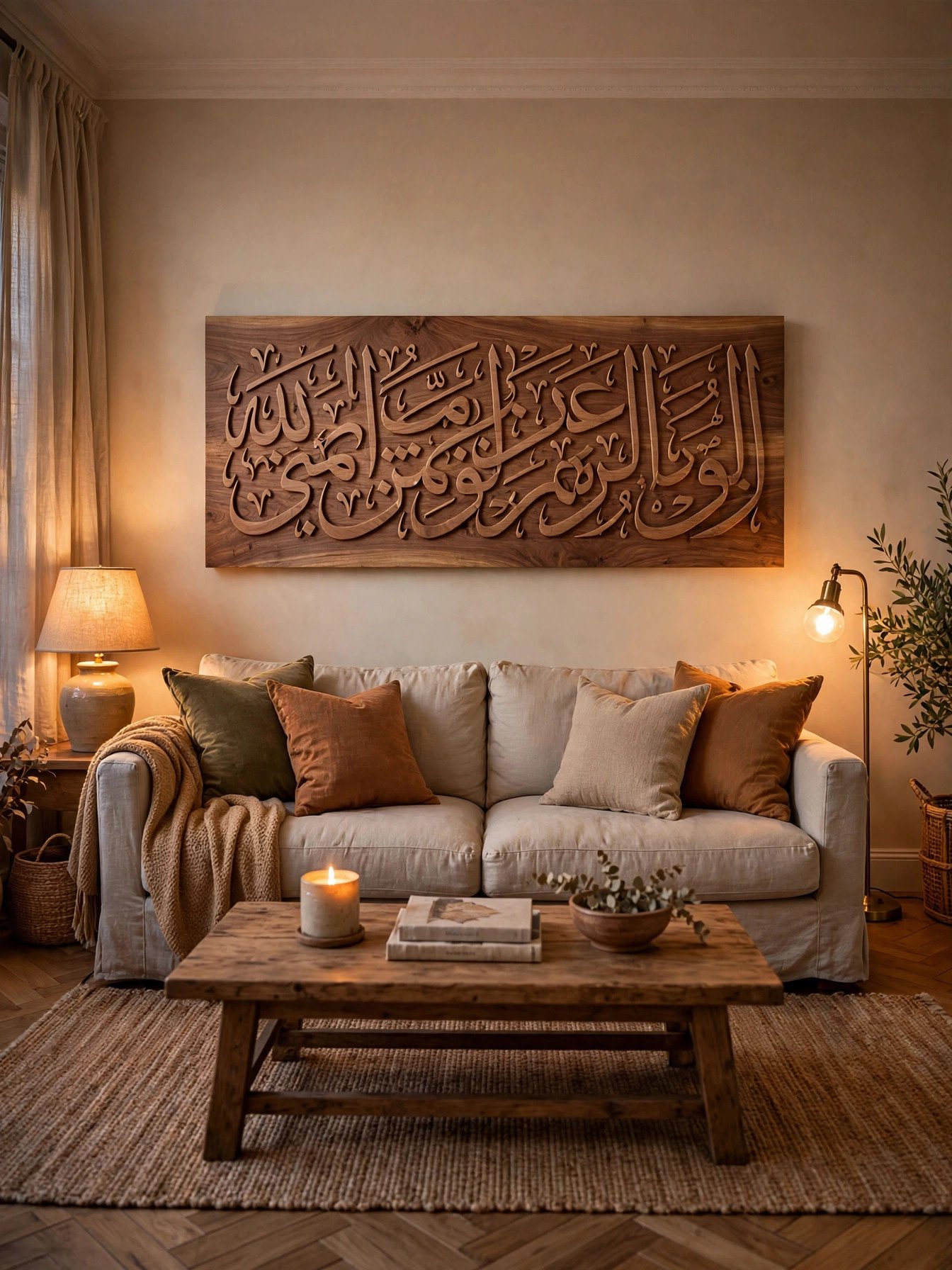
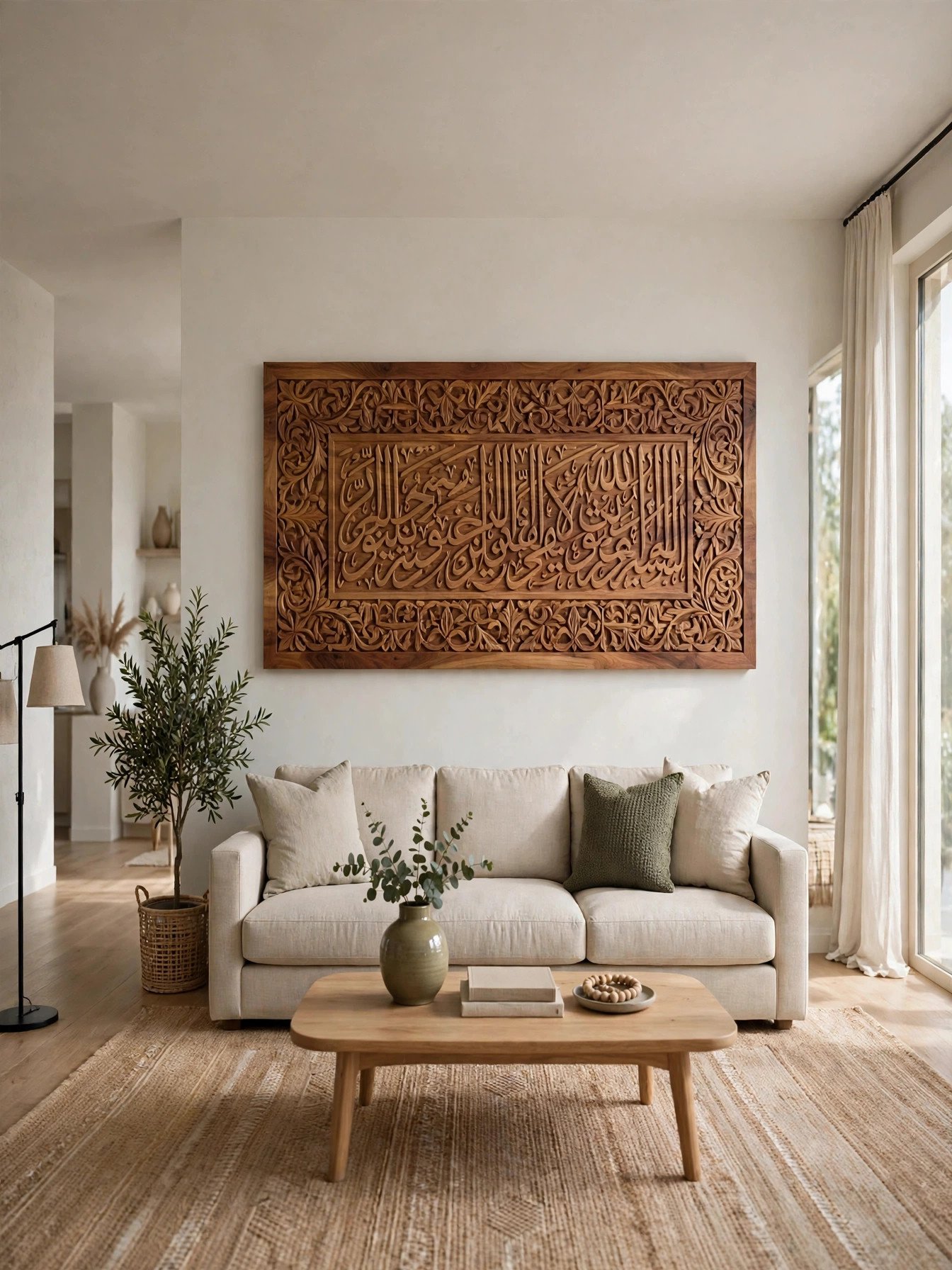
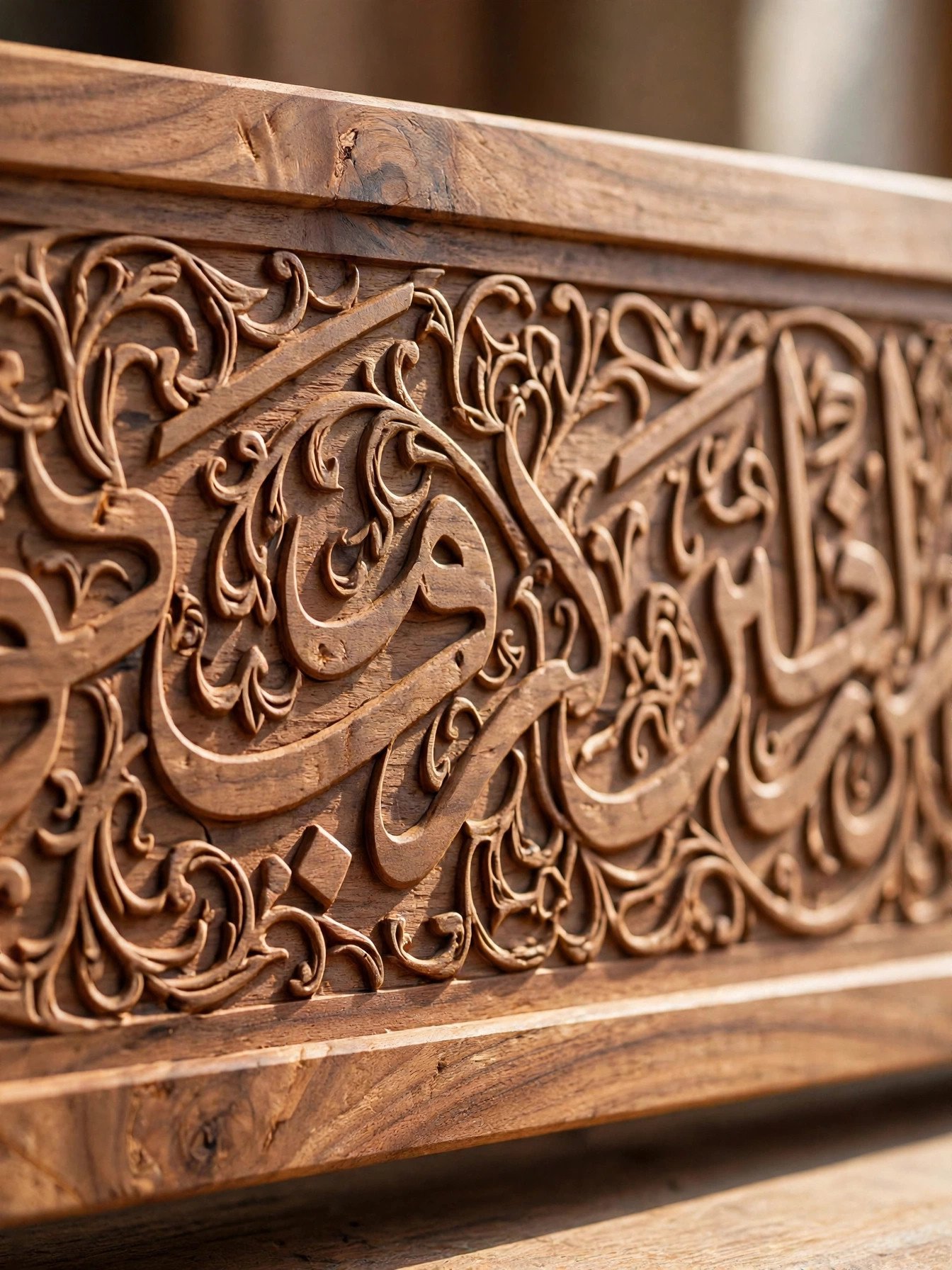
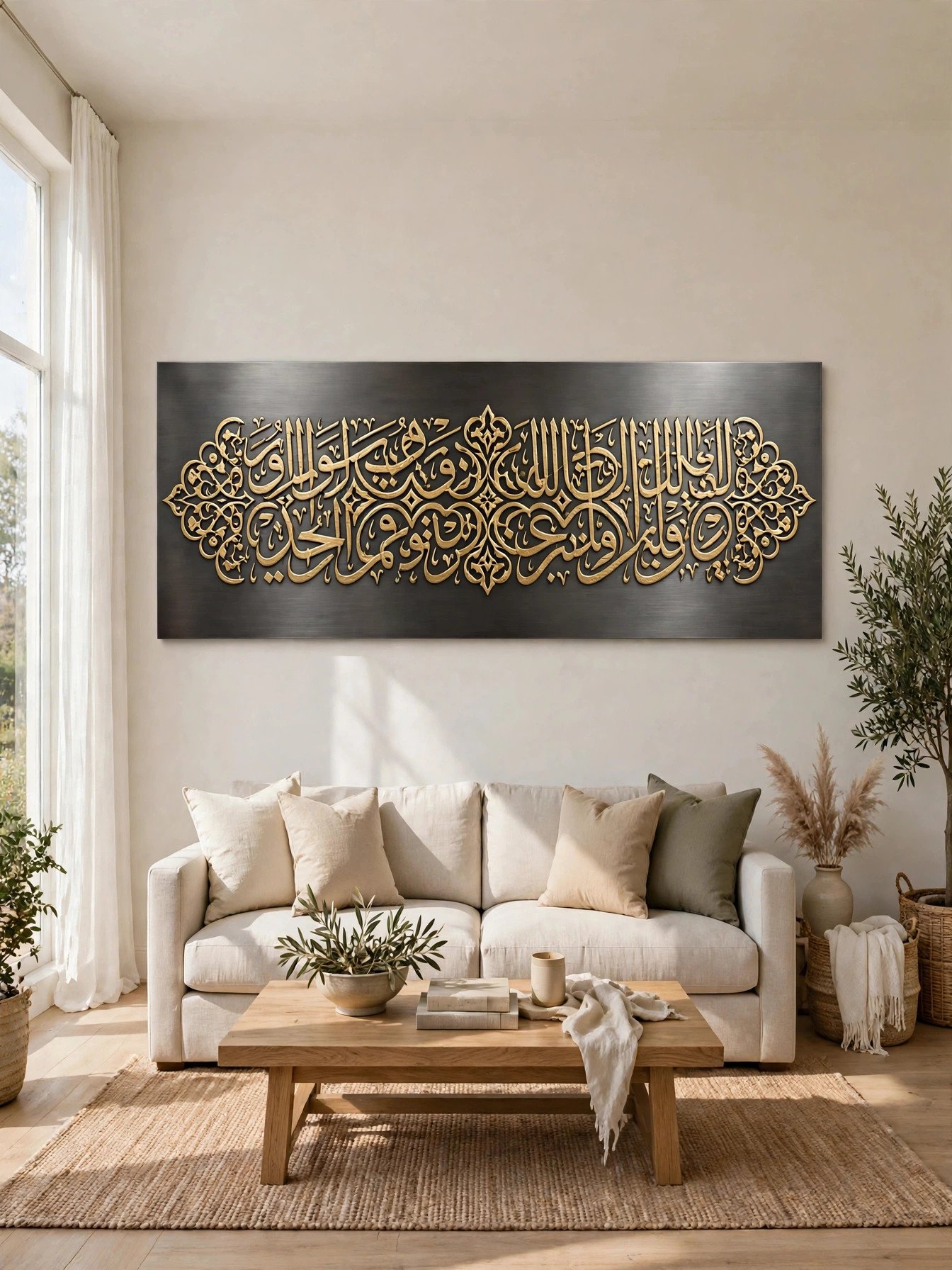
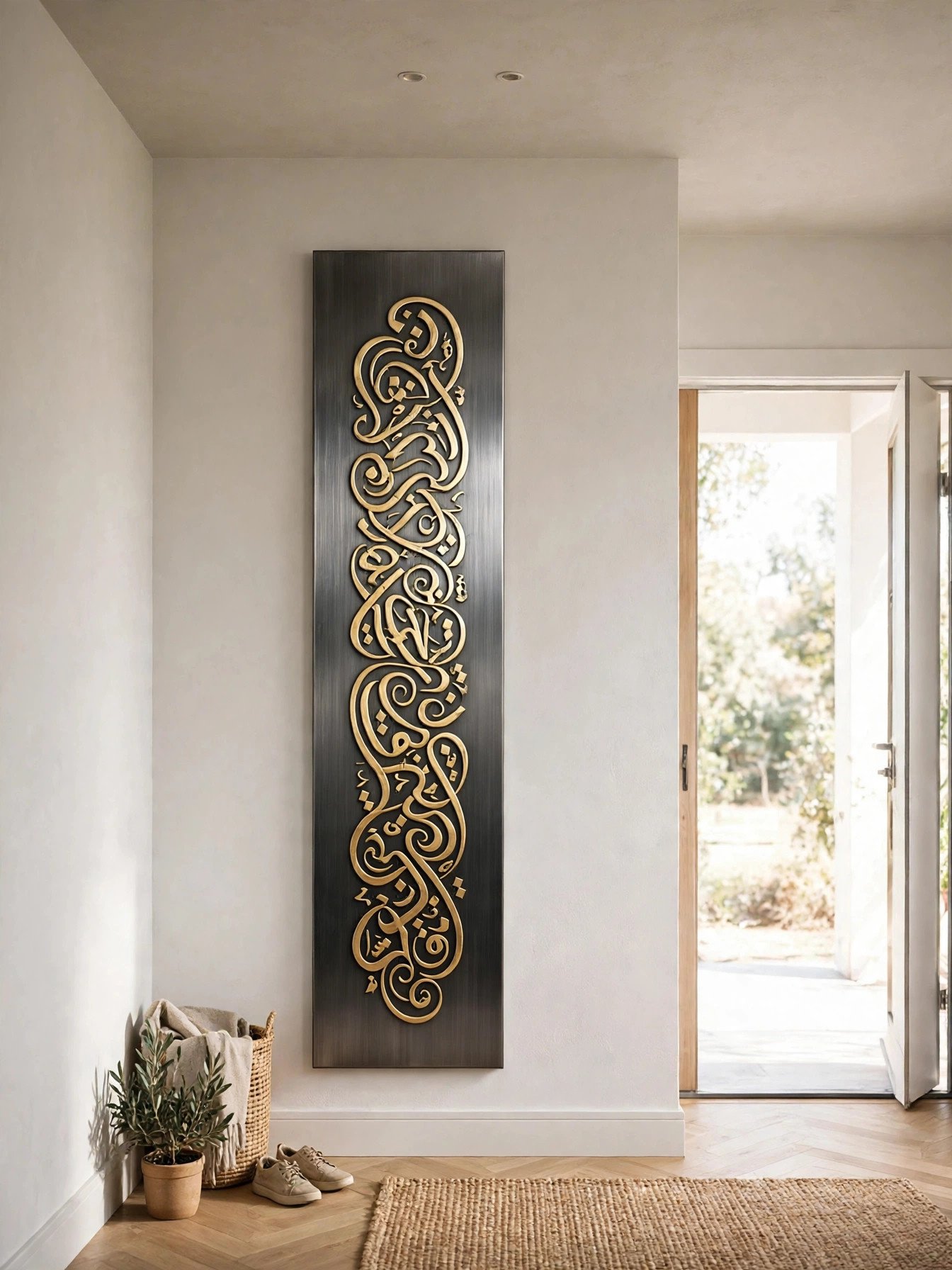
“Then which of your Lord’s favours will you both deny?” It is a question from Surah Rahman, repeated like a refrain through the chapter, and it stops you every time you hear it. This wooden calligraphy piece carries that verse, Fabi Ayyi Alai Rabbikuma, carved in wood, so the question lives on your wall in a material that is itself one of those favours: a tree grown, cut, and shaped by human hands into something beautiful. The natural warmth of wooden grain and the depth of carved calligraphy suit each other perfectly, and the result is a piece that feels less like decoration and more like a presence in the room.
**Arabic Script:** Fabi Ayyi Alai Rabbikuma, from Surah Rahman
**MATERIAL:** wood, carved calligraphy, natural wooden grain
**DIMENSIONS:** to confirm
**Finish:** to confirm
**Color:** natural wood tones, exact shade to confirm
**Placement:** living room, entrance
Surah Rahman is often called the beauty of the Quran, a chapter that lists the blessings of Allah one after another, from the creation of humanity to the fruits of the earth, the seas, and the gardens of Paradise, returning each time to the same searching question. Reading it or hearing it is an exercise in gratitude, because each blessing named makes the question harder to answer with anything but humility. A Fabi Ayyi wall art piece brings that exercise into daily life. It does not need to be read word by word every day to do its work. Passing it in the hallway, seeing it above the sofa, or glancing at it during a quiet moment is enough to bring the question back to mind, and with it, a small inventory of the day’s blessings: health, family, a roof, a meal, a moment of peace.
Wood changes how calligraphy is experienced. Metal calligraphy can feel crisp and grand, and it suits many rooms beautifully. Wooden Islamic calligraphy feels different: warmer, softer, closer to the hand. The grain of the wood gives every piece a character that no two pieces share exactly, with lines and tones that shift as the light moves across them. Carved wood Quran art has a depth that flat print cannot match, because the letters are cut into the surface rather than laid on top of it, and shadows gather in the carving as the day changes. In a living room with wooden furniture, warm textiles, and natural tones, a carved wooden piece sits as if it had always belonged there. In a more modern room, it becomes the one natural, organic accent that keeps the space from feeling cold, a reminder that the home is a living place, not a showroom.
The living room is the natural home for this piece, above the sofa or on the main wall where the family gathers in the evening. A wooden calligraphy artwork suits that setting because the living room is where gratitude is most often felt in ordinary life: a family together, a meal shared, guests welcomed, children playing safely nearby. Each of those moments is, in the language of Surah Rahman, a favour, and the verse on the wall names that truth without preaching it. In an entrance, the piece works as a welcome of a different kind. Guests are greeted not by a generic decoration but by a question that honours the home they are entering and the blessings it holds. It sets a tone of warmth and humility from the first step inside, and it tells visitors that this household thinks about gratitude, not only about appearance.
Natural wood Islamic decor also suits the slower rhythms of the home. It does not demand attention with shine or colour. It rewards attention quietly, the way a well-made wooden table or a favourite bookshelf does, becoming more loved the longer it stays. Over time, a carved wooden piece gathers associations: the Ramadan it was hung for, the family gathering photographed in front of it, the evening someone first read the verse aloud and explained it to a child. That slow accumulation of memory is what turns a purchase into a heirloom, and wood, more than most materials, invites it, because it ages gracefully and feels more personal with every year.
As a gift, a Fabi Ayyi wooden piece suits occasions where gratitude itself is the message. It is a wedding gift that wishes a new couple a home full of recognised blessings. It is a housewarming gift that blesses a new house with the question that keeps a household humble. It is a Ramadan gift and an Eid gift that will outlast the season, and a gift for parents whose years of provision deserve to be honoured with a verse about recognising favours. A Muslim home gift in natural wood also suits people who prefer understated beauty to grandeur, and it fits homes of almost any style, from traditional to contemporary, because wood is a material every interior already understands.
One honest note matters for this piece. Carved calligraphy in wood is a craft of interpretation, and the exact rendering of a verse in a carved or photographed artwork can vary. The product described here is the Fabi Ayyi Alai Rabbikuma wooden calligraphy piece, and its dimensions and finish should be confirmed before ordering so that the piece you receive matches the wall and the room you have planned for it. What does not vary is the verse itself, the warmth of the material, and the question it asks of everyone who reads it.
Which of your Lord’s favours will you deny? Hung on the wall of a home that is loved and lived in, the answer is written all around it.
If you have any questions about this piece, its size, or its finish, please contact us and we will be glad to help.
Reviews
There are no reviews yet.